31.10.05

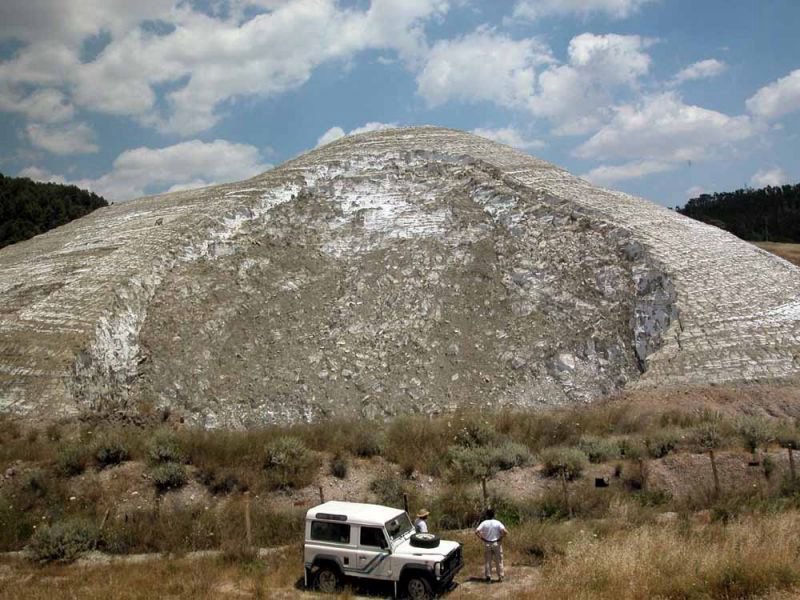
Collapse doline


Photo: Ugo Sauro

Collapse doline in the waste of a salt mine in the area of Caltanisetta, Sicily - Italy. (From: International Journal of Speleology)

Why taking pictures is forbidden...

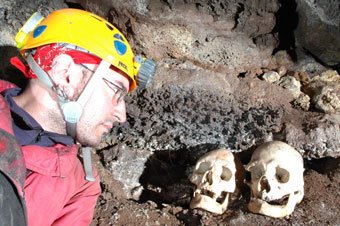
"In many caves taking pictures is forbidden. The explanation, that other cave visitors are annoyed by the flashlight is easy to understand. Another good reason is, that taking pictures takes time and tends to break up the group. And the flashlight disturbs bats, so in some countries it is forbidden by law, to take pictures of bats.
But the true reason, why taking pictures is forbidden, is typically copyright infringement. The cave owner wants to make some bucks by selling the right to publish images of his cave. Of course, it is his right! But the only way to do this is to prohibit photography, then all legal images are made by him and are protected by copyright laws. This is lawyer logic, but this is the way it works! (...)"
Full article: Showcaves.com

30.10.05

Cronologia de um resgate

Provavelmente, a maior e mais complexa operação de resgate numa gruta. Aconteceu em Agosto de 2003.

Operación de rescate en la sima Voronya:

"El éxito de una operación de rescate tan compleja, en la que se ha podido extraer a un herido en tan solo 64 horas desde una profundidad de 500 m, se ha debido a la coordinación y profesionalidad de todo el equipo de la expedición, la colaboración del grupo de rescate del M.Ch.S. de Sochi, la paciencia y motivación de herido, y también gracias a la ayuda de Vatik Vartanyan (Gantiadi), cuyo apoyo ha sido fundamental en esta difícil etapa de la expedición."
Leia a cronologia: Aqui

Vladimir Iljukhin Cave System: breakthrough behind the fourth siphon

Vladimir Iljukhin Cave System - Arabika Massif, Western Caucasus
Caving Club "Sokol'niki-RUDN", Moscow, Russia

"During the 2005 summer expedition to the Vladimir Iljukhin Cave System (Arabika Massif, Western Caucasus) a noticeable result was achieved: a successful dive through the fourth siphon at –1240m, the first attempt since 1989 when the siphon was reached and tested for the first time, resulted in the discovery of a post-siphon continuation."

Full article: Speleogenesis

Inside Earth

A Newsletter of the Cave & Karst Programs of the National Park Service
Volume 8 Number 1 - pdf - Click here
This Issue Edited by Rodney D. Horrocks, Wind Cave National Park

Table of Contents:
Featured Articles:
Integrating Cave and Karst Inventory Methods with GIS, Wind Cave National Park, Walz & Spoelman 2
Coyote Cave Hits a Mile, Marc Ohms 5
Park Updates (Listed alphabetically):
Carlsbad Caverns National Park; Dale Pate 6
Grand Canyon Parashant, Kyle Voles 7
Hawaii Volcanoes National Park, Jadelyn Moniz Nakamura 7
Jewel Cave National Monument; Mike Wiles, Rene Ohms, & Peggy Renwick 8
Wind Cave National Park; Rod Horrocks & Marc Ohms 9

8th Conference on Limestone Hydrogeology

Neuchâtel, Switzerland, 21-23 September 2006

First Announcement & Call for Abstracts

Deadlines - Call of Abstracts & Final Papers
Submission of Titles and Abstracts : 15 November 2005
Acceptation of Abstracts : 22 November 2005
Submission of complete Manuscripts : 15 February 2006
Return of reviewed Manuscripts to authors : 15 April 2006
Camera ready Paper due : 31 May 2006


Oficial Site: HydroKarst

29.10.05

Fogo de artifício...

Depois do 'The Cave', 'Vampire Bats'

Depois do, desastroso e irrealista, filme 'The Cave', vem aí uma nova série: "Vampire Bats", morcegos mutantes, transformados em pequenos monstros pelo efeito mutagénico da poluição industrial... com a participação da actriz que desempenhava o papel de Xena, a princesa guerreira... CNN. (Peço desculpa pela irrelevância deste post, mas não resisti a publicitar o novo papel da princesa guerreira, face aos temíveis monstros alados.)

Geode Gigante de Pulpí


O geode de Pulpí constitui um fenómeno único a nivel mundial dadas as suas dimensões, perfeição, tamanho e transparência dos cristais.
Encontra-se situado no interior de uma mina a 50 m de profundidade, coincidindo com o nível do mar e a 3 km da linha de costa.
Forma um volume oco de 10.7 m3, com 8 m de largo e 1.7 m de alto.
O tamanho médio dos cristais de gesso é de 0.5 x 0.4 x 0.3 m, com exemplares de 2 m de largura.

Página com informações e estudos sobre o Geode de Pulpí: Click here

Atlas de las principales redes subterráneas de Pirinero Vasco-Frances

Consulte na página da Sociedad Alfonso Antxia

Expedición Rapa Nui 2005

"Isla de Pascua, más conocida como Rapa Nui o el Ombligo del Mundo Te pito te henua, es una zona de estudio vulcano espeleológica privilegiada en Oceanía, debido a la profusión de sus tubos volcánicos y la utilización humana de los mismos. Una tierra en la que mana el misterio, acerca de un pasado incierto, y en la que cruentas luchas tribales marcaron la historia hasta la casi desaparición del pueblo de Hotu Matua, el rey que llevó a su pueblo desde “Hiva” hasta la isla más remota del planeta." (...)
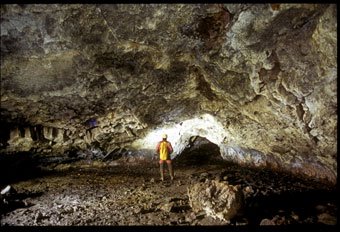

Artigo sobre a expedição: Click here

Musgo nas concreções

Consulte neste artigo a melhor forma para eliminar musgos e restos de argila de concreções sem as danificar.

"Investigación preliminar sobre el crecimiento y tratamiento de musgo en la Cueva de Pozalagua" Click here

LABORATORIO SUBTERRANEO DE LA CUEVA DE POZALAGUA

La cueva de Pozalagua, está ubicada en las faldas de las dolomíticas peñas de Ranero, en el municipio vizcaíno de Karrantza, siendo famosa desde el año 1959 por la profusión de sus formaciones excéntricas, si bien, para los espeleólogos es más conocida por su cercanía con la Torca del Carlista, que es la sala más grande Europa y tercera más grande del mundo. La cavidad, es utilizada desde 1990 con fines turísticos llegando a tener más de 30.000 visitantes anuales. Estas visitas traen consigo una degradación progresiva de la cavidad, de tal modo que en los últimos años han sido perceptibles grandes descalcificaciones, originadas en formaciones secundarias como consecuencia de la aparición de hongos y líquenes, debido al incremento de temperatura, Co2 y por el calor que producen los focos.
Desde el mes de Junio de 2004 y por período mínimo de cuatro años, la Sociedad de Ciencias Espeleológicas Alfonso Antxia, de Bilbao, estudiará la afección que sufre la cueva de Pozalagua con las entradas masivas de turistas. Para ello se han instalado en la cueva cuatro estaciones climáticas de última generación, que a cada hora registran una docena de variables entre las que se pueden destacar: Temperatura, Humedad relativa, Presión atmosférica, CO2, Temperatura de la roca, Temperatura del Agua en varios puntos y Conductividad del agua. (...)

Full article: Cota Cero

28.10.05

Natural Trap Cave preserves window to last ice age

"Amid darkness and death, information about the last ice age is entombed at the bottom of a cave in northcentral Wyoming. Here, scientists believe, 20,000 to 25,000 years ago a variety of large mammals died when they were unable to skid to a stop after topping a rise and plummeted 85 feet into what is now called Natural Trap Cave. With the passage of time, the carcasses of a musk ox, saber-toothed lion, a bear twice the size of a grizzly and a cheetah-like cat were fossilized. "It's a world-class paleontological Pleistocene deposit," (...)


Full article: Starherald

IU spelunkers work to clean up Buckner's Cave

"There exists an underworld where IU students go to explore the darker corners of the state -- a system of caves that runs through much of southern Indiana and surrounding states, including Kentucky and Tennessee."

Full text: IDS News

27.10.05

Todos à festa!!!!

Começa amanhã.
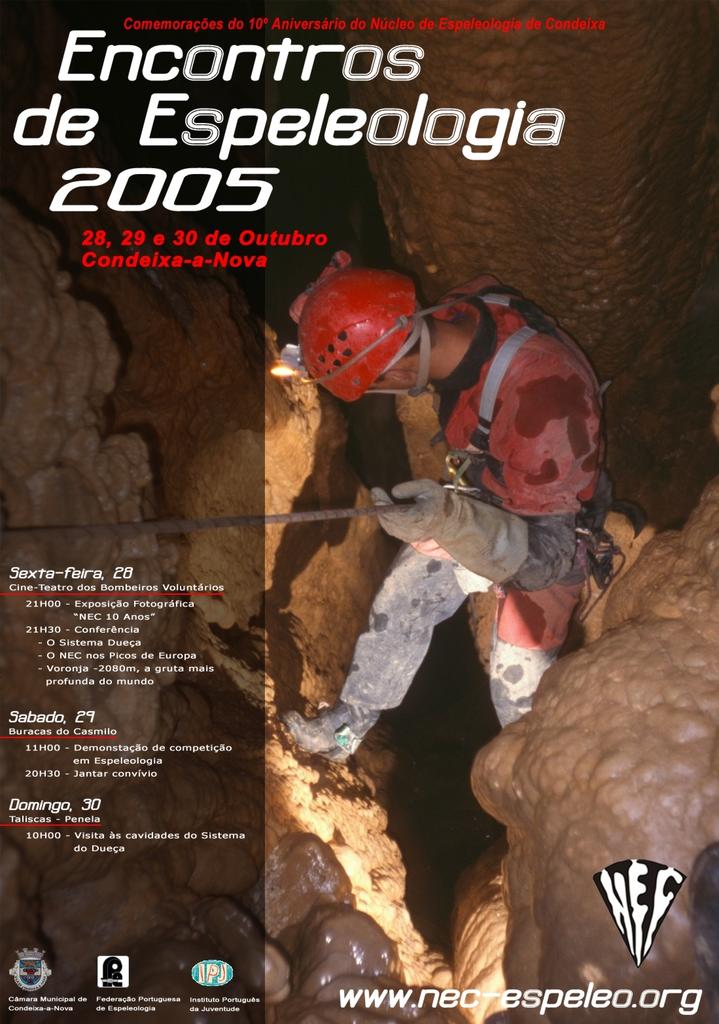
Desta vez, o pretexto para nos encontrarmos todos, é a comemoração do 10º aniversário do NEC - "Encontros de Espeleologia 2005" .
Parabéns ao NEC, muitos e bons anos de Espeleo, são os votos do Blog Profundezas...

26.10.05

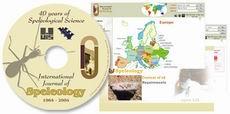
IJS CD-Rom: 40 years of Speleological Science

With the distribution of Volume 33 in 2004, a 40-year long cycle has come to an end.The 40 year anniversary of the IJS raised the idea of making a memorial CD to be distributed during the 14th International Congress of Speleology in Athens (Greece) during 2005. In fact, it is difficult to find the entire IJS collection even in well known libraries, and this CD provides the opportunity – thanks to modern technology – for anyone to consult 40 years of Scientific Speleology.
This multimedia CD contains a database of all IJS volumes from number 1 (1/2) 1964 to number 33 (1/4) 2004 and the handbook MANUAL FOR KARST WATER ANALYSIS.

Order it, on International Journal of Speleology: Click here

Salvaguarda do Museu Geológico

Recorde-se o que o Museu Geológico representa:
1. É o principal museu do género do país, com colecções científicas únicas.
2. Desde cerca de 1859, altura em que se começou a constituir no âmbito da criação da Comissão Geológica, que ocupa, por direito próprio, as actuais instalações no 2º piso do antigo Convento de Jesus, ao abrigo de portaria oficial. Neste local nasceram assim a Geologia e a Arqueologia portuguesas, o que lhe confere um enorme interesse histórico.
3. A vastidão e beleza do espaço das salas de exposição, o mobiliário a elas adaptado e o modelo expositivo muito marcado pelo sec.XIX, conferem-lhe um extraordinário interesse museológico, único no País e dos poucos ainda existentes na Europa. Sobre este importante aspecto têm-se pronunciado variados especialistas na matéria, tanto nacionais como estrangeiros, como a Profª. Raquel Henriques da Silva, Drª. Simoneta Luz Afonso, Prof. A. H. Oliveira Marques, Prof. A. M. Galopim de Carvalho, Prof. D. Oldroyd, Prof. J. Rey, Prof. R. Leinfelder entre outros.
4. O Museu Geológico tem estado ininterruptamente aberto ao público desde a sua criação, constituindo um apoio insubstituível ao ensino da geohistória, proporcionando visitas de estudo a professores e alunos das escolas dos vários níveis de ensino.
5. As colecções científicas ali existentes são ferramenta indispensável aos investigadores do Instituto, as quais, graças ao trabalho destes, foram sendo enriquecidas ao longo dos anos, estando igualmente disponíveis à comunidade científica.
6. O Museu Geológico está integrado na Rede Portuguesa de Museus, atendendo às suas características científicas, históricas e museológicas. O eventual desmantelamento do Museu Geológico representaria um gravíssimo atentado ao património nacional, situação tanto mais chocante quando a iniciativa parte duma instituição com um passado cultural notável, congregando numerosas personalidades das Ciências e das Letras portuguesas.
Esta petição apela, assim, ao Senhor Primeiro-Ministro e ao Senhor Ministro da Ciência, Tecnologia e Ensino Superior, para que não permitam a concretização daquele atentado.
Assinatura da petição: Aqui

25.10.05

One Bulgarian Climbs Out of World's Deepest Cave

"One of the three Bulgarian speleologists trapped in the world's deepest cave Krubera has managed to climb out of it, Bulgaria's Speleology Federation reported.Thursday morning Svetlomir Stanchev climbed out to the ground and is now in the expedition's base camp. The climbing took him two days but he is in good health, the Federation explained.The snow cover in the region is nearly half a meter deep, but it is expected to melt and increase the water level in the cave.The fourth Bulgarian in the expedition Orlin Kolov is at a depth of 580m, but the location of the other two Bulgarians - Teodor Kisimov, Konstantin Stoilov is unknown.Earlier on Thursday it was reported that the Bulgarian speleologists who have been trapped in Krubera in Georgia are expected to climb out by October 26.The joint Bulgarian-Ukrainian expedition was expected to last until October 28, but will most likely be ended earlier due to the bad weather in the region, the Bulgarian Federation of Speleology announced on its website.Teodor Kisimov, Konstantin Stoilov and Svetlomir Stanchev reached a depth of 2,080 meters earlier, going in deeper than any Bulgarian has ever been. Continuing torrential rains had flooded some tunnels, leaving the Bulgarians trapped in their bases inside the cave."
Article from: Sofia News Agency

24.10.05

SERGIO GARCIA DILS DE LA VEGA

Membro do projecto internacional:
"THE CALL OF THE ABYSS"
Fique a saber um pouco mais sobre o espeleólogo que estará em Portugal esta semana, numa conferência sobre: Voronya -2080m, a gruta mais profunda do mundo.


"Sergio García Dils de la Vega, es miembro del International Cave Exploration Team CAVEX (Equipo Internacional de Exploraciones Subterráneas CAVEX) y del MTDE Team. Pertenece a la Sección Espeleologica de la Sociedad Excursionista Antequerana desde 2.001.
Amablemente nos ha recibido para contarnos sus avatares en las exploraciones de las exploraciones de la Sima Krubera y de la Sima Kuzgun, objetivos del proyecto del que forma parte y que esta patrocinado por National Geographic; y charlar un poco de la situación espeleologica actual. (...)"


Entrevista a Sergio Dils em: Cota Cero

23.10.05

Primeira pilha de combustível a hidrogénio portuguesa no mercado

HW 125 é o nome da primeira pilha de combustível a hidrogénio, concebida e produzida em Portugal a entrar no mercado mundial no final do mês de Setembro. A pilha foi desenvolvida pela empresa SER-Soluções Racionais de Energia, em parceria com o INEGI e outras entidades. Esta pilha de combustível a hidrogénio com uma potência de 100W e subordinada ao lema “Fiabilidade – Operacionalidade – Flexibilidade” foi colocada no mercado mundial depois de três anos de investigação tecnológica, que contou com o contributo do INEGI e INETI. “Estes pilares que assenta a personalidade desta nova fonte de energia, com um desempenho marcado pela eficiência técnica e económica”, refere um dos responsáveis da SRE. Com várias aplicações, como back up para falhas de energia, potenciadora de maior autonomia em UPS’s e fonte de iluminação de emergência, a HW 125 visa segmentos de mercado que abrangem actividades e áreas económicas tão diversas como os das telecomunicações, vídeo vigilância, náutica de recreio ou caravanismo, refere o INEGI em comunicado. Cienciapt.net
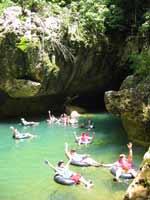
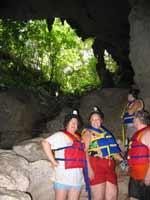
Mammoth Cave

Mammoth Cave in Kentucky is the world’s longest, with 350 miles of surveyed passageways.

“Mammoth Cave isn’t known for formations,” Carson said. “It’s known because it’s the longest in the world. It has mammoth passageways and it goes on and on. It’s like a spelunker’s dream.”

The site has the most extensive cave system on earth. With more than 350 miles of surveyed passageways, it is twice as long as any other known cave. Plus, geologists think there could be as many as 600 miles of passageways that have not been discovered yet.

More informations: FortWayne.com

Trapped Bulgarian Speleologists Started Ascend

Teodor Kisimov and Konstantin Stoilov who set a new record by descending further than any Bulgarian has ever been have started climbing out of the world's deepest cave Krubera.

The two have passed one of the flooded galleries at 1,400 meters below the surface and are going for the 1,200-meter-deep base camp. Svetlomir Stanchev, who has already spent two days in the base camp said that the melting snow did not obstruct the movement of the two.

Earlier on Thursday it was reported that the Bulgarian speleologists who have been trapped in Krubera in Georgia are expected to climb out by October 26.

The joint Bulgarian-Ukrainian expedition was expected to last until October 28, but will most likely be ended earlier due to the bad weather in the region, the Bulgarian Federation of Speleology announced on its website.

Teodor Kisimov, Konstantin Stoilov and Svetlomir Stanchev reached a depth of 2,080 meters earlier, going in deeper than any Bulgarian has ever been.

Continuing torrential rains had flooded some tunnels, leaving the Bulgarians trapped in their bases inside the cave.


News from: Sofia News Agency

22.10.05

Espeleólogos británicos buscaban uranio en unas cuevas de México

Sus planes fueron descubiertos porque tuvieron que ser rescatados
" El caso de los británicos, en su mayoría militares, rescatados ayer al quedarse atrapados en una cueva cuando buscaban uranio, ha provocado un incidente diplomático entre México y Gran Bretaña, ya que habían entrado en México con visa de turistas y no contaban con autorización para actividades científicas. El presidente Fox ha manifestado su malestar. Buzos especializados rescataron ayer a dos espeleólogos británicos, de un grupo de seis, que quedaron atrapados hace una semana en una cueva del centro de México por el crecimiento de las aguas subterráneas, según la agencia Notimex. El operativo de rescate se inició a primeras horas de ayer jueves en el sistema de cuevas de Alpazat, en el municipio de Cuetzalan del estado de Puebla, después de la llegada de dos expertos británicos en buceo en cavernas. Los espeleólogos se negaban a ser auxiliados por mexicanos. El proceso de rescate fue supervisado por el director de la Unidad de Protección Radiológica de la Comisión de Seguridad Nuclear mexicana, Luciano Sánchez, quien señaló que en las grutas puede haber gas radón en yacimientos naturales. (...) "
Full article in: La opinion de Tenerife

CAVE WAR

"RUSSIANS "DID FLOOD" OUR SPELEOLOGISTS?
Russians assert that Ukrainians burn into the underground trap in deepest cave of peace.


Russian news agencies yesterday reported that deepest the precipice of planet - cave "Kruber- crow" (Gagrinskiy ridge, Abkhaziya) - arranged trap to Ukrainian speleologists, who left themselves to attach its world record. (...)"
Full article: Click here

21.10.05

Be carefull, please...

Sujestões para férias...


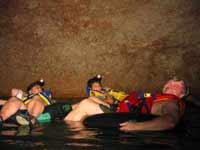
Belize Cave Tubing,


e Beckham Creek Cave House.

Há sempre opções, para quem não abdica de um pouco de conforto e diversão...

Geoscientists Resolve Inconsistent Data On Crystal Growth, Dissolution


Virginia Tech Geoscientists Patricia Dove and Nizhou Han have demonstrated that crystals dissolve and grow by the same set of analogous 'reversed' mechanisms. Previously, the scientific community had long-maintained that growth and dissolution could not be unified into a single framework of understanding. The new evidence is certain to overturn that perception.

"We call this the Eureka paper," explained Dove. "For more than a decade, our group has been studying how minerals and crystals dissolve while also collaborating with Jim De Yoreo on how organisms grow crystals and minerals into complex shapes such as seashells and bone." It was because of the unique intersection of these two research areas in our laboratory that we were able to establish this fundamental link." (...)

Full article: Science Daily

Mammoth cave yields most recent animals

"Alaskan island proves stronghold for mammoths in North America.
Archaeologists have unearthed the most recent remains of a mammoth yet discovered in North America. The bones, found in a cave on Alaska's remote Pribilof Islands, may represent the last bastion of the giant animals, or megafauna, that once freely roamed the continent.The discovery underscores the fact that megafaunal species often seem to have made their last stand on isolated islands, sheltered from the danger of hunting. Some say the fact that such animals survived longer when beyond the reach of humans is proof that mankind was a big factor in driving the beasts to extinction."
Full article in: Nature news

Officials find lab in a cave

"An unusual discovery last week in a cave at Peak’s Corner, near the Fyffe area, still has Drug Task Force agents looking for answers.
Task Force Commander Darrell Collins said he received a complaint Thursday about an active meth lab inside the cave. “We have worked several calls since Oct. 1 about abandoned meth labs, but I think this is the first one we have ever worked where it was found inside a cave,” Collins said. “There was a time when we found several marijuana plants growing inside caves in the county, but this is the first active meth lab I can remember.”
An unidentified man, searching the area for arrowheads, apparently found the lab Thursday afternoon, Collins said. The size of the lab was more than agents could handle in one trip. Agents had to make several trips with two four-wheelers to get all the materials out of the cave. “We don’t have any leads at this point,” Collins said. “But there is still an open investigation into who might have left this lab there.” Authorities have no idea how long the lab was inside the cave. "
Full article: Times Journal

19.10.05

Situation in Krubera

"More than 4 days was raining in Kaukazus Mt. as a result of a ciclon, located above the Black Sea. Due to the rain, the level of the underground waters in the karst systems raised dramatically.
This happened also in the deepest cave of the world - Kruber cave (depth: - 2160 m), where takes place joint Ukrainian-Russian-Bulgarian speleological expedition, led by Yuri Kasian from Ukrainina Speleological Association.
At the moment 2 groups of cavers are blocked in the underground camps at depth - 1200 and -1790 m.
The explorers are feeling OK, they have enough food, light and fuel to stay for 12 days in the camps. The weather forecast shows, that the rain will stop within 2-3 days.
The cavers will wait the stopping of the rain and the flow of the water from the flooded passages. Then, depending on the situation, they plan either to continue down to the bottom of the cave, or to leave back to the surface.
The last information received from the expedition is from Today 19 October. There is snowing in the last two days so the situation in the cave is normalised. It gives the possibility for Teodor Kisimov and Konstantin Stoilov two of Bulgarian cavers members of the international team to made succesfill attack the dry bottom of the cave at - 2080 m. The hydronivelation of the cave reached the depth - 1400 m and one Russian-Bulgarian group descent to the cave at - 580 m and to survey the passge named "Lamrehtsofen".
The expecting date of the end of the expedition is 26 October, 2005."
Text from Alexeyzhalov, in: Speleomania
Record for Bulgaria
"Bulgarian speleologists have climbed down to the bottom of the world's deepest cave. The three reached a depth of 2,080 meters in the Krubera Cave, Georgia.
Teodor Kisimov, Konstantin Stoilov and Svetlomir Stanchev have scored a record for Bulgaria.
They failed to reach even deeper to 2,160 meters because those lower cavities were filled with rainwater." Article from: www.novinite.com

10 000 Visitas


OBRIGADA!

18.10.05

Bulgarian Speleologists Trapped in World's Deepest Cave


"Three Bulgarian speleologists and their partners from the Ukrainian-Bulgarian expedition Krubera 2005 have been trapped in the world's deepest cave - Krubera.

Due to the torrential rains continuing for a fourth day in a row the members of the expedition are trapped in their camps in the cave located in West Caucasus, Bulgaria's Speleology Federation announced.

Bulgarians Teodor Kisimov and Konstantin Stoilov are with their Ukrainian colleagues at a camp located at a depth of 1,790m.

Svetlomir Stanchev, the third Bulgarian in the expedition, is at a camp at a depth of 1,200m along with Russian speleologists.

It is still not clear when the speleologists will continue with their work, but the rain is expected to go on for another 4 to 5 days.

The head of the Bulgarian Speleology Federation Alexey Zhabov was cited as saying that the teams are fully equipped and have enough provisions for at least ten days.

The two base camps in Krubera are linked through a wire telephone and they keep in touch.

The Krubera 2005 expedition is a scientific one. The Bulgarian participants have to study the vertical and the horizontal galleries. The expedition is expected to end October 28. "
Text from: Sofia News Agency, Image from: Speleogenesis

17.10.05

Édouard-Alfred Martel

Em 1866, o pai de Edouard Alfred Martel, advogado e amante da Paleontologia, levou o seu filho de 7 anos a visitar gruta de Han na Bélgica. Este acontecimento marcou-o para toda a vida.
A partir de 1888, Martel organizou e dirigiu uma série de campanhas anuais, acompanhado pelos seus discípulos, de Portugal à Noruega e desde o Cáucaso às montanhas rochosas e publicou os seus resultados em artigos e livros.

Martel fundou a Société de Spéléologie, uma das primeiras sociedades espeleológicas e editou a primeira revista de espeleologia Spelunca.

Edouard Alfred Martel é hoje considerado o pai da Espeleologia moderna.
Extracto do seu Livro "Les abismes", publicado em 1894:
"... rien d'aussi étrangement beau ne s'est jamais présenté à nos yeux ..."
"Au delà s'offre à nos regards étonnés une monumentale avenue, haute de 10 à 30 mètres, large de 5 à 10. Il y a des coudes nombreux, dont chacun nous donne l'émotion d'un arrêt brusque, d'une impasse. Derrière tous cependant l'espace noir se prolonge. Si loin que porte la lumière presque solaire de notre lampe réflecteur à magnésium, nous ne voyons pas la fin du grandiose couloir.
Nous avons presque peur, sans savoir pourquoi. Aucun bruit ne trouble le majestueux silence de cette magnificence inconnue; le flot même ne chante pas. Nul être humain ne nous a précédés dans ces profondeurs; nul ne sait oû nous allons ni ce que nous voyons; nous sommes isolés, deux dans la barque, loin de tout contact avec la vie, rien d'aussi étrangement beau ne s'est jamais présenté à nos yeux; ensemble et spontanément nous nous posons la même question réciproque: Est-ce que nous ne rêvons pas?"

Mais informações: Click here
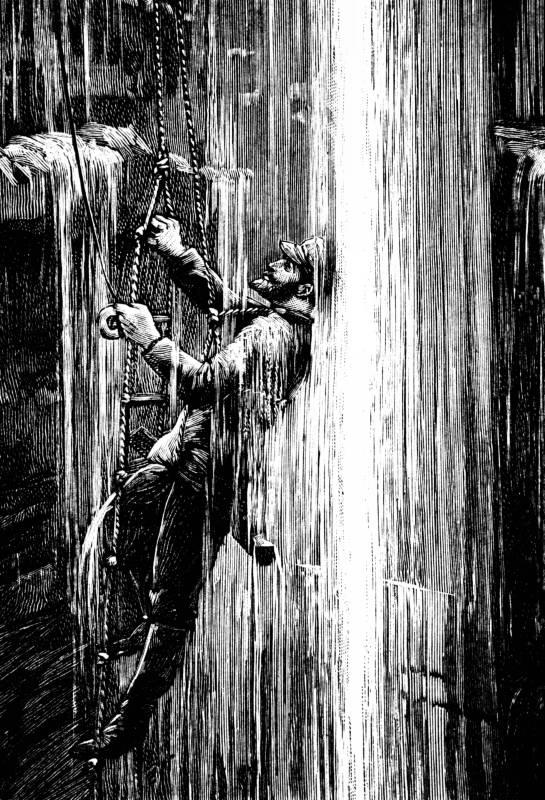
Image: E. A. Martel on one of his most famous expeditions into Gaping Gill, Yorkshire, Great Britain. Painting by Lucien Rudaux. From the Martel Gallery by Bernd Kliebhan.

Medicina Crítica en medios hostiles y de aislamiento

Publicación médica analiza patologías y situaciones de emergencia en medios hostiles:
Médicos del Hospital de San Jorge de Huesca, expertos del Instituto Tecnológico de Aragón (ITA) y de la Escuela Politécnica Superior de Huesca (EPSH), perteneciente a la Universidad de Zaragoza, han participado junto a profesionales de otras autonomías en el libro ''Medicina Crítica en medios hostiles y de aislamiento'', una monografía con distintos aspectos de la atención sanitaria urgente, de la que el Gobierno de Aragón distribuirá 100 ejemplares entre los profesionales del 061. En ella, se abordan temas como la hipotermia y los accidentes por avalanchas y aludes; el buceo y el espeleobuceo, la patología expedicionaria y de la altitud, las comunicaciones en emergencias médicas en zonas aisladas, aspectos psicológicos y abordaje de individuos en condiciones adversas; las patologías producidas por seres vivos terrestres o marinos, etc.


Full article, in Aragón Investiga: Click here

Voronya/Krubera -2160 m, Another expe...

"There is another expedition on plateau Arabika. The expe is organised by club Cavex (www.cavex.ru).
They reach the -2160 m! The divers (Oleg Klimchouk, Yuriy Bazilevskiy a Nikolay Solovyov) croosed after sump Kvitochka (little flower) in -1968 m two other sumps (named Podnir and Unitaz). The cave continues!Another team climbed up windows in last pit Game Over (-2080). The cave continues too!
The expedition should finish at November 6th." (Text: Martin Sluka From Cavediggers)

Main collector i Kanin plateau (Julian Alps) continuation

September 26th 2005 - 4 cavers from Slovenia and Italy found continuation in cave Renejevo brezno in -1050 m. They found a big underground collector 10 x 5 m (h x w) with watterflow cca 100 l/sec. After 300 m with several big watterfalls comming from ceiling they stopped on -15 m deep step. The gallery there is 20 x 10 m and waterflow is about 200 l/sec. There are several open dry galleries and the continuation of main collector is open too.The distance from cave of Mala Boka spring (+650 m, 5.5 km) is about 500 m and -100 m vertically. The overall denivelation of this system could be 1857 m. (Text: Martin Sluka From Cavediggers)

16.10.05

António de Barros Machado

"António de Barros Machado iniciou a sua investigação no campo do estudo das aranhas, nomeadamente cavernícolas, em que publicou um apreciável número de novidades. Mas não limitou o seu olhar ao que lhe interessava directamente. Sempre que encontrou animais (ou até mesmo formas rochosas invulgares), colhia-os. Conservava os materiais retirados à Natureza e a seguir identificava-os, isto é, descobria os nomes de cada ser colhido. Para tanto recorreu à literatura de identificação taxonómica disponível.
Casos difíceis, levou-os aos museus onde trabalhava (Porto, Madrid, Paris, Lisboa, para os comparar com material biológico identificado e depositado). Todo o material assim não identificavel, enviou-o, sob forma de colecções seleccionadas, aos especialistas dos respectivos grupos taxonómicos, alimentando assim a investigação de colegas. Estas actividades produziram amplo fruto, apreciável na vasta literatura descritiva de novas espécies e outras entidades taxonómicas, em que o nome de A. de B. Machado se encontra mencionado como coleccionador. Muitos especialistas dedicaram-lhe também novas espécies em agradecimento pelo envio desse material.
Ao longo da sua vida de investigador, e especialmente em Angola, procedeu deste modo, tendo colhido, seleccionado, conservado nas melhores condições, e finalmente enviado para investigadores seus colegas mais de 860 colecções. Até 1995, mais de 2184 novas entidades taxonómicas resultaram do trabalho de A. de B. Machado, número impressionante perante o facto de que, até a data, apenas cerca de 2 milhões de espécies animais e vegetais, incluindo micróbios, são conhecidos da ciência."
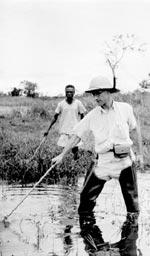
(Texto de Carola Meierrose, Fundação Mário Soares)
"A importância da obra de António de Barros Machado não reside apenas na sua grande capacidade científica individual, bem expressa no incessante trabalho de descoberta da biologia da Lunda, em Angola, mas igualmente na generosa partilha com a comunidade científica mundial das suas cerca de 860 colheitas zoológicas, associando os grandes especialistas em sistemática e taxonomia ao Laboratório de Biologia do Museu do Dundo e contribuindo assim, decisivamente, para o conhecimento da biodiversidade da África Central.Grande número de autores, receptores de materiais do Dundo, continuam ainda hoje a agradecer a invulgar generosidade e os amplos conhecimentos demonstrados por Barros Machado, nomeando entidades taxonómicas novas para a Ciência “Machado-género” ou “machadoi-espécie” ou mesmo “Barrosmachadoi-taxon”. Desta maneira surgiram mais de 250 novas entidades taxonómicas honrando o nome deste grande zoólogo Português."
Consulte o Dossier António de Barros Machado da Fundação Mário Soares, em: http://www.fmsoares.pt/arquivo_biblioteca/Dossier03/

15.10.05

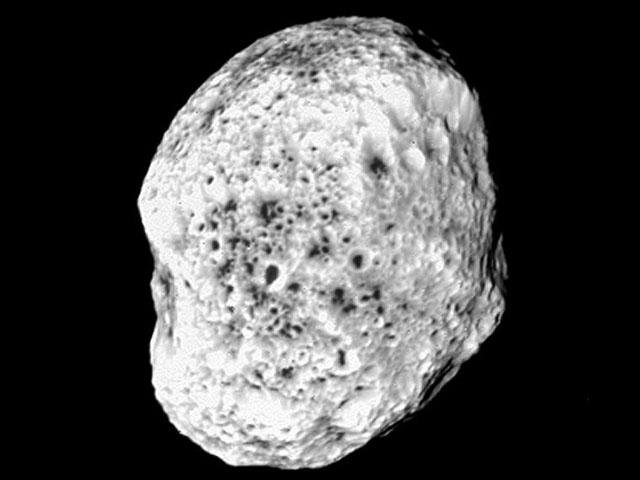
Hyperion: Sponge Moon of Saturn


Credit: Cassini Imaging Team, SSI, JPL, ESA, NASA


Paraíso??

Explanation: Why is Saturn's moon Hyperion textured like a sponge?
Recent high-resolution images from the robot Cassini spacecraft orbiting Saturn show Hyperion to be an even stranger place than thought before. Previously, it was known that the length of a day on Hyperion is unpredictable. The moon's highly elliptical orbit around Saturn, its highly non-spherical shape, and its locked 4:3 orbital resonance with Titan torque Hyperion around so much it is hard to predict when the Sun will rise next. The newly imaged craters on the unusually coarse surface are surely the result of impacts, but for some reason have dark centers. The low density of Hyperion indicates it might even be a spelunker's paradise, riddled with tremendous caverns. (Text: NASA)

Sima Pumacocha

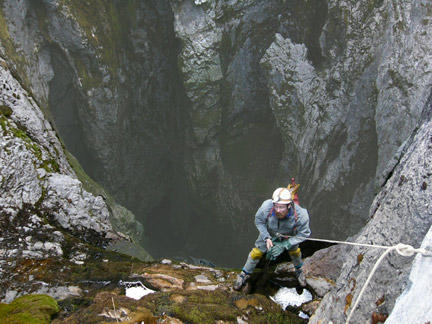
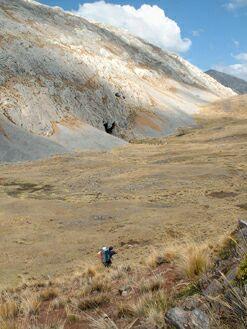
Sima Pumacocha and other caves of the Yauyos district of Central Peru.


"This website summarizes cave explorations in the Yauyos District of central Peru during expeditions in 2001, 2002 and 2004, and includes Sima Pumacocha, Qaqa Mach'ay, caves of the Puyo Valley and small caves near Yauricocha. All are located in the Andes Mountains over 4000m above sea level, and together constitute some of the highest explored caves in the world."


Description of three expeditions to the Yauyos District of central Peru, including exploration of the deepest cave in South America and the highest surveyed cave in the world: http://members.shaw.ca/pumacocha/

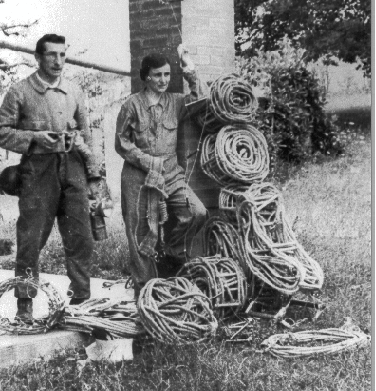
Norbert & Elisabeth Casteret


Quando se queixarem do peso dos sacos de corda/cabo lembrem-se, dantes era tudo mais difícil...

14.10.05

Saline Lake Found in Yongcheon Cave

According to the Jeju Island Cave Research Institute (Director: Sohn In-seok), the lake is seven to 15 meters wide, six to 15 meters deep and 200 meters long, and is located approximately 2.3 kilometers north of the entrance of the cave. Given that the lake is 100 to 150 meters away from the seashore, it is estimated that sea water might have come in through the cave.

Greek Cave Puzzles Archaeologists

"Deep under a quiet valley in southern Greece, archaeologists are struggling to unravel a 1,400-year-old tragedy that wiped out a rural Byzantine community.
Sometime in the late 6th century, a group of at least 33 young men, women, and children sought sanctuary from an unknown terror in a sprawling subterranean network of caves in the eastern Peloponnese.
Carrying supplies of food and water, oil-lamps, a large Christian cross and their small savings, the refugees apparently hunkered down to wait out the threat. But experts believe the sanctuary became a tomb once supplies ran out. (...)"
Full article in The Moscow Times: Click here

New depth of Krubera Cave

The cavers from CAVEX brake the record

The new depth is -2 160 m


" The expedition of CAVEX "Window’ 2005" endedThe preliminary results reported by Georgyi Sapozhnikov from EkaterininburgThe cave divers Oleg Klimchuk and Juryi Bazilevski worked behind the Cvetochka sump in the depth - 1986 m, which was dived from Koliya Solovem (Ukrainian Speleological Association) during this winter. After that 2 new sumps ( named Podnir and Unitaz) were dived. The depth difference between Cvetochka sump and the last riched point ( according the preliminary calculations) is 174 m so the new depth of Krubera cave is - 2160 m. The cavers made some climbing in the Wet pit in the Krim meander and in the bottom of the cave up to the pit "The game is over". The second one is very perspective and may give new passages and new depth! "
From Speleomania: Click here

13.10.05

LifeStraw, invenção do século?

Este gadjet produzido por uma empresa de texteis dinamarquesa especializada em mosquiteiros insecticidas consiste numa palinha portátil de 25 cm e com menos de 100 g que é nada mais que um completo kit de purificação de água dirigido principalmente a países em vias de desenvolvimento sendo que a energia dispendida é a do próprio utilizador.

Com as doenças causadas por bactérias como a salmonella, e. coli, cólera ou tifóide no topo das causas de mortalidade mundial, esta invenção capaz de garantir qualidade de água ao seu utilizador por cerca de 1 ano vem dar uma esperança a milhões de pessoas.

A LifeStraw é equipada com um sistema de três estágios de filtração de partículas removendo até 15 microns. O sistema de filtragem consiste numa resina baseada em iodina e carbono activado granular. Quando a água é sugada, passa por filtros texteis ultra finos de modo a filtrar pó e sdimentos, assim como aglomerações de bacteria. No centro do tubo, vários meios incluindo iodina, vão matar e conter o restante das bactérias, vírus e parasitas assim como melhorar o sabor da água.

O seu principal objectivo, matar bactérias é feito, segundo testes laboratoriais, numa ordem de log 7 - log 8, isto é, percentagens de mortalidade bacteriana na ordem de 99.99999, melhor que muitas redes de abastecimento em países desenvolvidos.Estima-se que esta ideia genial possa custar menos de 2 €, fornecendo mais de 700 litros de água potável ao utilizador. Se chegar a ser comercializada vai passar a constar com toda a certeza em qualquer kit de ajuda humanitária, ou expedição de espeleólogos.

Por: Tiago Serrenho, Ambientalistas
18º Festival de Spéléologie en Île-de-France

"Amis spéléos,
Cette année le Festival fête ses 20 ans.De nombreuses surprises vous attendent.Le Chlorophylle Club d'Ormessonsur Marne et le Comité Départementalde Spéléologie du Val de Marne (CDS 94) vous convient au 18e Festival deSpéléologie en Île-de-France, 26 novembre 2005"
Christian WEBER

Site oficial: Click here

ESPELEOCOL

'Asociación Espeleológica Colombiana', Boletin nº1 Download

From: Scintilena

Cave stays in east-central Idaho

" There's no room service, no swimming pool, no microwave oven, no coffee machine, no television, no electricity.
But the accommodations do include mattresses and wood stoves.
An 89-year-old retired construction worker this month began advertising cave stays in east-central Idaho for $5 per night, or $25 a month.
Richard Zimmerman, also known as "Dugout Dick," said his dwellings can double as bomb shelters and serve as mining sites for people who bring their own picks.
Zimmerman, himself a cave resident, has spent decades carving out a dozen quarters from a hillside overlooking the Salmon River rapids.
Now he said it's time to break from his labors and help jump-start tourism in this remote mountain community.
The caves stretch as far as 100 feet into the hillside and are bolstered by rocks, peeled fir poles, mud and straw.
So far, a few tourists from overseas -- one from England, another from Spain -- have taken him up on the offer. Zimmerman said they did not take to life underground.
"It's not for everyone," the self-styled Salmon River caveman acknowledged. But "I expect the trade will pick up anytime now." "


From REUTERS: Click here

12.10.05

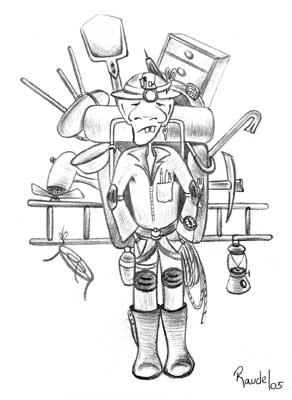
Espeleólogo precavido


...vale por muitos!!!

Cave woman

Leigh Dayton has a cool time exploring hobbit territory in the Malaysian state of Sarawak.

Full article, in The Australian: Click here

11.10.05

What's this?

Cave discovery dispels lynx myth

"Bones found in caves in North Yorkshire have dispelled myths about the extinction of a British hunting cat.
The discovery in Moughton Fell Fissure Cave, near Settle, in the 19th Century led experts to believe the lynx became extinct in the UK 4,000 years ago.

But new carbon dating of other bones found at Kinsey Cave in the 1920s and 30s suggests the animals were still around in early medieval times.

The findings have been described as of "national significance" by researchers.

Funded by the Yorkshire Dales National Park Authority, carbon dating revealed the Kinsey Cave bones were only 1,500 years old, indicating that the lynx was hunted to extinction or lost its territory when farming intensified. (...)
Conservation archaeologist Robert White said: "The findings do surprise us in that the lynx became extinct 2,500 years later than we thought. "
In BBC News: Full article

10.10.05

Voronya-Krubera: -2164m

"After information from the Bulgarian cavers who is the members of joint Ukrainian-Russian- Bulgarian expeditionin Krubera which started in 7 October 2005 the new depth of Krubera cave is 2 164 m. This was the result of the efforts of the last expedition of CAVEX team which finished at 6 October. The information is based on personal communication among Bulgarian cavers and members of CAVEX and is unofficial !!! "
From Speleomania: Click here

Eles tentam...


Na árdua tarefa da desobstrução de passagens em cavidades naturais, quase tudo é permitido em nome da transposição de obstáculos... Eles tentam, será que conseguem?

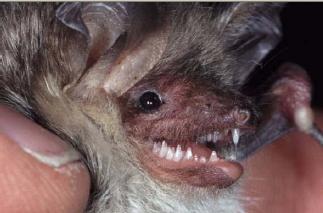
SARS probably originated in bats

"Bats are highly likely to be the original source of the deadly SARS virus, say scientists.

An international team of scientists report evidence of a SARS-like virus in wild Chinese horseshoe bats in today's issue of the journal Science.

The findings into the origins of the virus that causes SARS, or severe acute respiratory syndrome, support those in a recent issue of the Proceedings of the National Academy of Sciences. (...)"

Full article: Click here

7.10.05

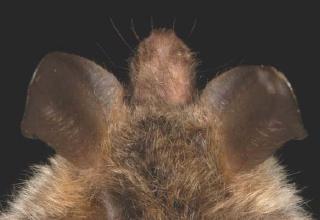
Illustrated identification key to the bats of Europe


© Dietz & von Helversen

Illustrated identification key to the bats of Europe
By Christian Dietz & Otto von Helversen

Electronic publication Version 1.0 Part 1 & Part 2

ENCONTROS DE ESPELEOLOGIA 2005


"Em Janeiro de 1995, um grupo de jovens cria o Núcleo de Espeleologia de Condeixa (NEC), fruto do entusiasmo pelo maravilhoso mundo subterrâneo das Serras Calcárias de Condeixa, Sicó e Alvaiázere.Desde então procurou contribuir para a exploração, estudo, divulgação e protecção do património espeleológico, através duma participação activa em diversas iniciativas locais, nacionais e além fronteiras.
Com os Encontros de Espeleologia 2005 o NEC pretende partilhar com todos a sua história e as suas descobertas e, quem sabe, lançar em conjunto novos desafios." Texto: NEC
Parabens ao NEC, pelos seus 10 aninhos de existência.
Toda a informação: Site oficial do NEC

6.10.05

Espeleólogos criticam destruição de centro de estudo numa área importante


"O presidente da Sociedade Portuguesa de Espeleologia (SPE) contestou hoje a destruição de uma escola em Minde, que funcionava como centro de estudo dos investigadores das grutas da região, considerada das mais importantes do país.
Em declarações à Agência Lusa, José António Crispim acusou a Junta de Freguesia de Minde de ter destruído o edifício, sem salvaguardar a retirada de parte do material de trabalho dos espeleólogos, o que causou a destruição de equipamento no valor de dois mil euros. A demolição da escola sucedeu em Junho mas "só agora é que fizemos o levantamento total do equipamento destruído que estava na cave", afirmou o dirigente da SPE. Duas centenas de metros de cabos, paióis, aparelhos de colheita automática de amostras de água, fogões de campismo e gambiarras foram alguns dos equipamentos destruídos nas operações de demolição, revelou o presidente da SPE. No entanto, mais do que o equipamento, José António Crispim criticou a ausência de uma "base de estudo" para a Freguesia de Minde que "tem um conjunto grande de grutas muito importante e não há nenhuma estrutura de apoio à espeleologia". (...)"
Notícia completa em: Airc online

5.10.05

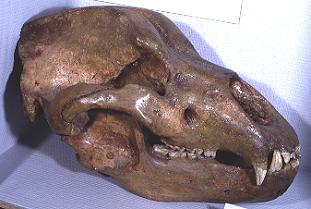
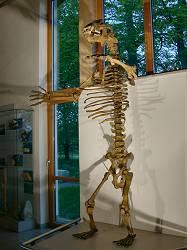
Exposição sobre o Ursus spelaeus


Está patente, no museu etnológico de Pommelsbrunn (em Frankonia, Germany), uma exposição sobre o Ursus spelaeus Rosenmüller 1794 (urso das cavernas), até Fevereiro de 2006.
Foi em Pommelsbrunn que os ossos de unicórnio foram reconhecidos pela primeira vez como pertencentes ao extinto Ursus spelaeus, por Rosenmüller.


Informação sobre Ursus spelaeus: Click here and here

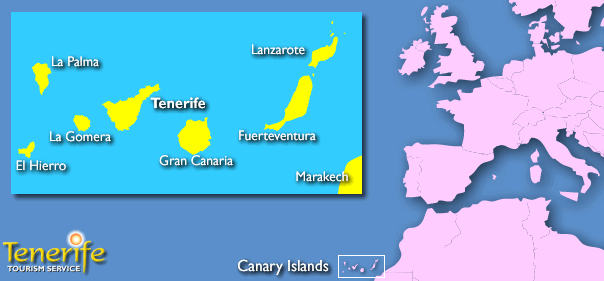
New Show Caves on the Canary Islands


"The Islas Canarias are located off the African coast, about the same latitude as the Sahara desert. Formed by the volcanism of a hot spot, the islands form a sort of chain from east to west.
Caves on the Canaries are always connected with volcanism. There are huge lava tubes, once a lava tube on Lanazarote was the longest known lava tube on Earth. There are also small erosional caves in the soft tufa, blister caves and so forth. And finally there are artificial caves, which were dug into the soft tufa.
At the moment two new show caves await their inauguration.
In Icod de los Vinos is the lava tube Cueva del Viento, which also was the longest lava tube on Earth, some time ago. It has already been a show cave, decades ago, but it was closed to protect the troglobionts inside. Now it seems it is renovated, to be reopended.
The second cave is really famous. A small cave dug by the natives, the Guanches, which is painted. Obviously it is called Cueva Pintada, painted cave. It was closed for many years, to protect the paintings. The news, that it will open soon, are old too. "
Text from: Show Caves

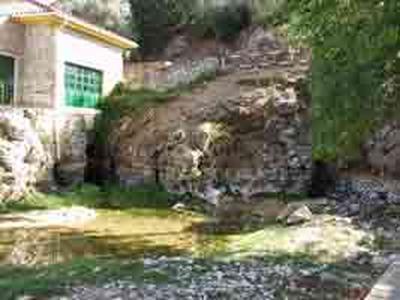
Anços secou


Nascente do rio Anços.

Uma nascente que debita 50 Mm3 por ano (Cunha, L. 1999), Secou!

4.10.05

Evaluation of the Anthron DSD-30

DSD-30 accepts rope from 9mm to 11mm.

"Evaluation of the Anthron DSD-30 (previouly the DSD-25) Double Stop Descender " by Aaron Bird, in Cavediggers: Click here

Anthron test page: Click here

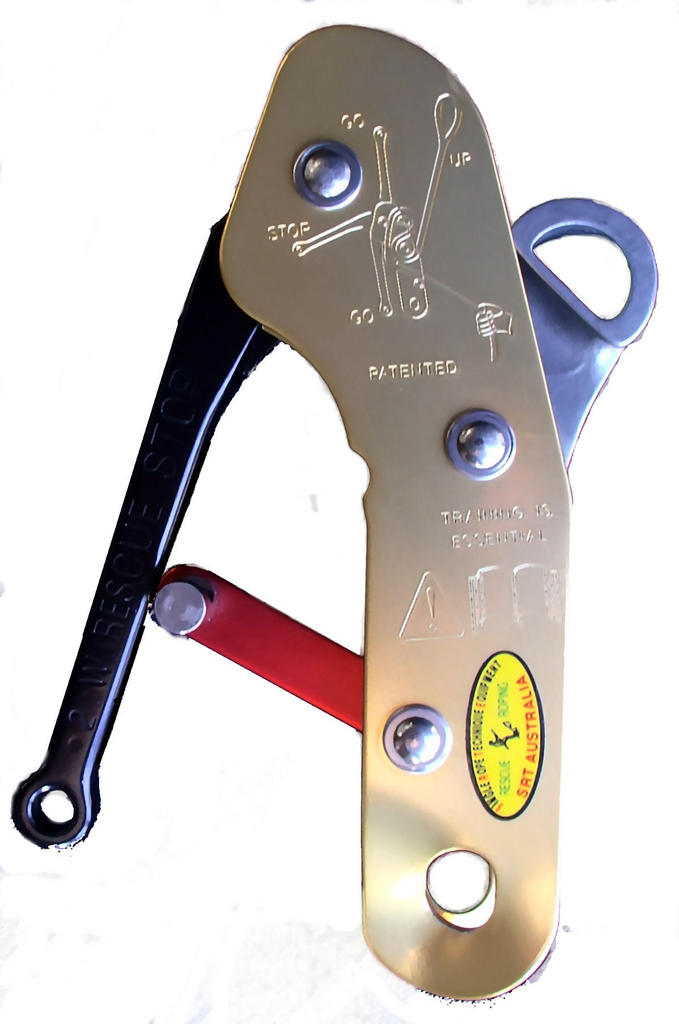
New ‘05 SRTE Two Way Rescue Stop™ patented


Two way rescue Stop 9mm to 13mm

Informations of SRTE: Click here and Certificate of Conformity

OJO GUAREÑA 110KM


Topo: Grupo Edelweiss


No passado dia 17 de Setembro conseguiram unir o Sifão Terminal da Galeria d'el aburrimiento (Ojo Guareña) com o Sifão Resplandor na Cueva Villallana - Torcona. Esta união faz com que o complexo Ojo Guareña alcance os 110 km de desenvolvimento horizontal.

Actulamente, é a maior de Espanha e 11ª a nível mundial.

Informações sobre a expedição em: Grupo Edelweiss

Failure to check tri-mix cause of cave diving accident

"(...) Divers must breathe different mixtures of gas at different depths, so Bedard breathed from a tank of pure oxygen until she had descended about 30 feet. Then she switched to nitrox, a combination of oxygen and nitrogen.
About 130 feet down, she switched to her primary tanks, which were supposed to contain a blend of oxygen, nitrogen and helium appropriate for that depth.
They didn't.
Banks realized something was wrong with Bedard, who switched back to her nitrox tank. The two began their ascent, according to witnesses' statements to the commission. (...)"
Full Article in CDNN News: Click here

3.10.05

Primeiro Congresso CentroAmericano de Espeleologia

Programa preliminar del congreso, Click here

Africans tell of hiding in caves on way to Spain

"It would look like a game of cat-mouse but for the desperation fuelling it. Hiding themselves by day in hillside caves to escape Moroccan police, emerging at night to eat from garbage bins, hundreds of African men prepared to make their break for Spain.

In their way were two three-metre razor-wire fences that separated Morocco from a tiny Spanish enclave providing a toehold in Europe - and an end of months of misery living in the bush. On the other side of the twin barriers, Spanish police were poised with guns, truncheons and motion detectors to keep them out. (...) "

In cnews: Click here

2.10.05

Proteger é preciso.


"É preciso sublinhar que uma gruta não é uma praça pública, nem um estádio, mas um santuário que guarda relíquias do fundo dos tempos.
A todo o momento uma coisa não assinalada pode ser destruída e de maneira irremediável.

Todas as grutas diferem umas das outras: cada qual tem uma configuração particular e pode oferecer ao explorador coisas novas ou inéditas, na condição de que este saiba detectá-las pela investigação ou pelo saber."

Michel Bouillon